How long does stamped concrete last?
With a solid base and regular resealing, stamped concrete can last many years. Weather, soil movement, and care all play a part, so ask providers what upkeep they advise for your site.
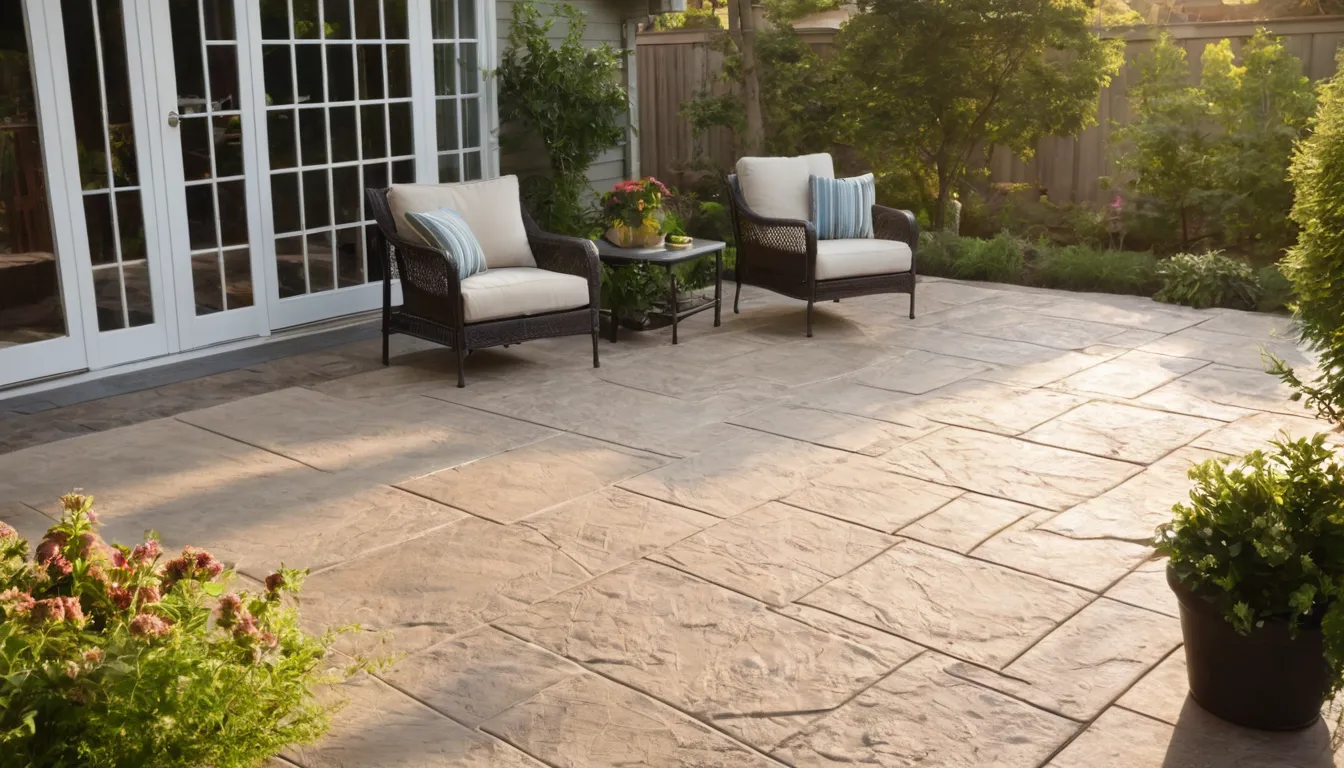
Stamped concrete is regular concrete that is colored and pressed with patterns while it is still soft. The result can look like slate, brick, cobblestone, or wood plank, but it is poured as one solid slab. Many homeowners choose it for patios, walkways, pool decks, and driveways.
Most of the outcome is decided before and during the pour. Weather, base prep, color choice, and sealing all matter, and the texturing step cannot be redone once the concrete firms up. Flashcrying Concrete connects homeowners in Riverside with independent providers who do the work, so you can compare written estimates, ask questions, and decide with no obligation. This page walks through the job from pour day to the first month.
Say you stand on a plain gray slab behind the house. It works, but it feels flat. Now picture the same space with the look of slate or brick. That is what stamped concrete does. Providers in our network pour the concrete, add color, and press a pattern into it while it is soft.
Stamped work is more time-sensitive than a plain pour. The surface can only be textured during a short soft window. Heat, dry air, and wind make that window shorter. Timing shapes concrete, so planning around the season pays off.
Long dry seasons make scheduling easier in many parts of the Riverside area. Hot spells and smoky air days can still shift a pour, and winter rain events can delay one. Ask each provider how they handle a changing forecast.
Picture the slab on pour day. The steps move in a set order, and each one depends on the last.
The work crew sets forms, checks the packed base, and places the concrete. It is leveled and smoothed. A solid base matters here, because a weak one can show up as cracks months later.
Color is either mixed into the batch or worked into the surface as a powder. A release agent goes on next, so the mats do not stick to the concrete.
While the surface is soft but can still hold its shape, workers press the mats down and tool the edges. This part moves fast. There is no do-over once the concrete firms up.
Later, shallow joints are cut so the slab can crack in a straight, planned line instead of a random one. Good providers place them to follow the pattern.
Say you walk outside the next morning. The patio looks done, but it is still young. Most providers ask you to keep off it for a day or two, and to keep cars off for longer. After the surface is cleaned, a sealer goes on. Sealer brings out the color and helps block stains. Ask your provider for exact timing.
Concrete keeps gaining strength for weeks. By about a month, it is close to full strength. This is when the grill, heavy planters, and patio set can move in. A thin hairline crack can still show up. It is not always a flaw, but ask how the provider handles it.
Ashlar slate, cobblestone, running-bond brick, and wood plank are common picks. Warm tans, soft grays, and earthy browns tend to suit stucco ranch homes and older tract homes. Ask to see sample photos of finished stamped concrete patios, and look at color in daylight.
It shines on patios, walkways, entry landings, pool decks, and driveways. Like other concrete flatwork, it needs a stable base and good drainage. For pool decks, ask about a slip-resistant sealer.
Pavers are separate pieces. A damaged one can be lifted and replaced, and they suit curves well. Stamped concrete is a single slab with fewer joints for weeds. Color matching a later patch is harder, though. Costs vary by job, so compare written quotes for both.
Sweep often and rinse off dust or smoke ash. Reseal every few years, or as your provider advises. Use mild cleaners and skip harsh chemicals that can dull the finish.
Say a door sticks or a crack runs along the old slab. That may point to settling. Foundation repair experts should look at that before any new patio goes on top. This page covers new stamped work, not concrete driveway repair or patching.
Get two or three written estimates. Line them up side by side, and take your time. Nobody has to be hired.
Look at photos of finished stamped jobs. Ask about licensing and insurance rules that apply where you live. Pick the scope that is clearest in writing, not just the one with the smallest price at the bottom.
Pick a stone, brick, or wood look, plus color tones that suit your home.
Forms, packed base, and the right slab thickness for a patio, walkway, or driveway.
Mats and hand tools press the pattern into the concrete while it is still soft.
Joints are cut and a sealer is applied to protect the color and surface.
Prices depend on size, pattern, color, base condition, and local labor. These are typical U.S. ranges only. Ask each provider for a written quote that lists what is included.
| Item | Typical range | Notes |
|---|---|---|
| Stamped patio, per sq ft | $8 – $18 | Complex patterns and multiple colors cost more |
| Small patio (about 200 sq ft) | $2,000 – $4,500 | Minimum job charges can apply |
| Stamped walkway | $1,500 – $5,000 | Length, width, and curves change the price |
| Stamped driveway (about 600 sq ft) | $6,000 – $15,000 | Thicker slab and a stronger base are common |
| Color hardener or special tints | $1 – $3 per sq ft | Add-on for deeper or custom color |
| Sealer coat | $1 – $3 per sq ft | Reapplied every few years |
Tell us what you want to build, how big it is, and any patterns you like.
A local provider reviews your project and explains options, timing, and typical pricing.
Line up the scope, materials, and timeline from each provider at your own pace.
Pick a provider if you want to, or walk away with no obligation.
Review several written estimates side by side and choose without pressure or obligation.
Local providers in our network do the work, and Flashcrying Concrete only makes the introduction.
Get simple explanations of patterns, timing, and sealing before you agree to anything.
Providers understand regional weather and common home styles when planning your pour.
Planning a new driveway or patio? Request a callback to check provider availability, or send an estimate request and a local provider can reach out.
No obligationWith a solid base and regular resealing, stamped concrete can last many years. Weather, soil movement, and care all play a part, so ask providers what upkeep they advise for your site.
Many providers ask you to stay off for a day or two and keep vehicles off longer. Sealing usually comes after the surface is cleaned. Ask your provider for exact timing, because weather can change it.
It can be, depending on the sealer and texture. Providers can add a slip-resistant additive, which is worth asking about for pool decks and sloped areas. Request that it be listed in your written estimate.
Planning a new driveway or patio? Request a callback to check provider availability, or send an estimate request and a local provider can reach out.
No obligation